How to Start a Car Detailing Business in 2026: The Complete Guide
Learn how to start a car detailing business in 2026. Step-by-step guide covering startup costs, equipment, licensing, pricing, and getting your first clients.
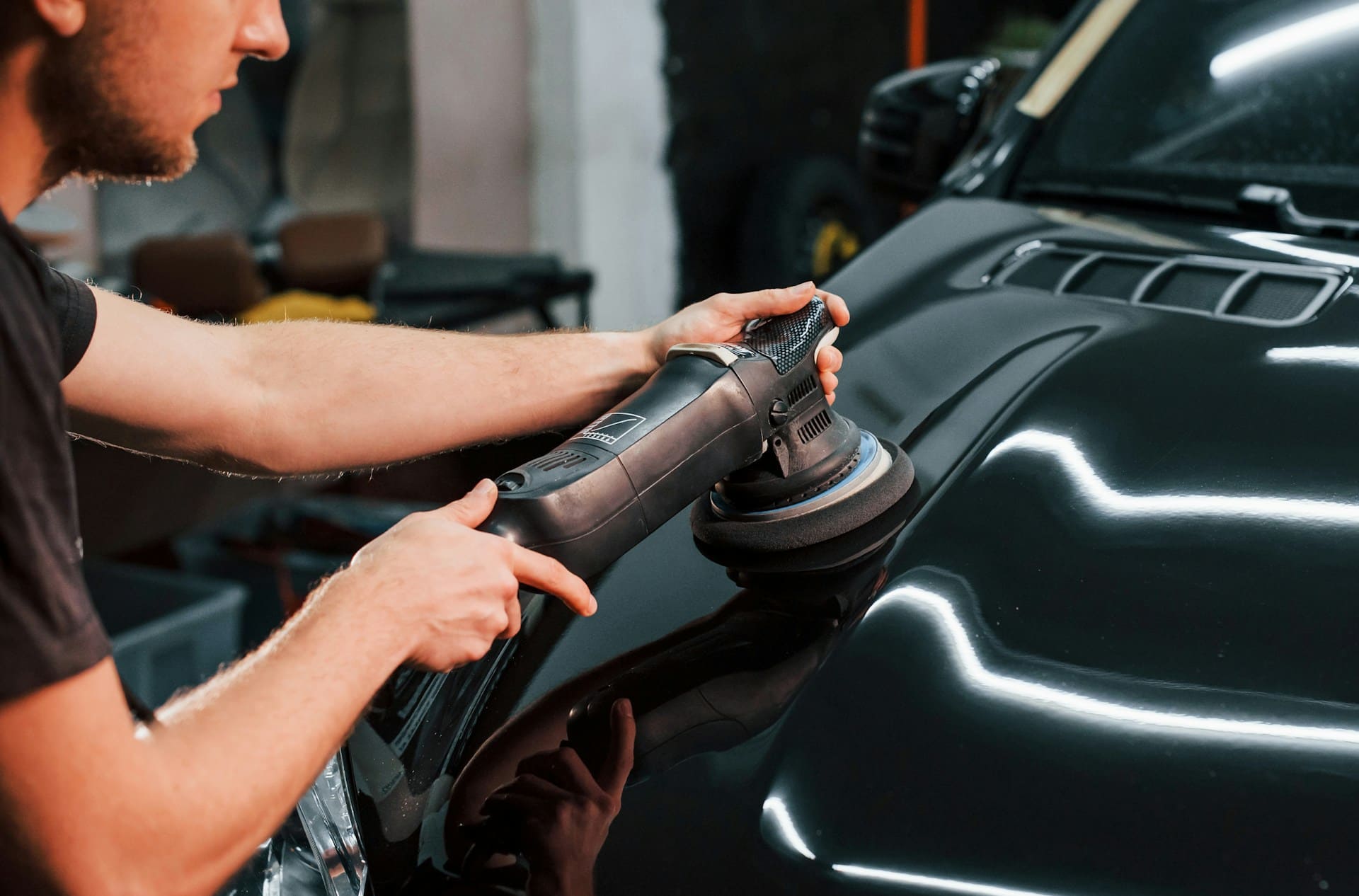
The car detailing industry in North America is worth over $14.7 billion in 2026 — and it's still growing. If you've been thinking about how to start a car detailing business, there's never been a better time. Low barriers to entry, high profit margins, and growing consumer demand make this one of the most accessible service businesses you can launch.
This guide walks you through every step: from choosing your business model and registering your company, to buying equipment, setting your prices, booking your first client, and scaling. No fluff — just actionable steps you can follow today.
Step 1: Choose Your Detailing Business Model
Before spending a dollar, decide how you want to operate. Your business model affects your startup costs, daily logistics, and earning potential.
Mobile Detailing
You drive to the customer's location with your equipment in a van or trailer. This is the most popular model for new detailers because:
- Startup cost: $2,000–$10,000
- No lease or rent — you operate from your vehicle
- Larger service area — serve multiple neighborhoods and cities
- Customer convenience — they don't have to go anywhere
The tradeoff: you need reliable transportation, a portable water setup, and you'll spend time driving between jobs.
Fixed Location (Shop)
You operate from a dedicated space — a garage, warehouse, or commercial unit.
- Startup cost: $20,000–$100,000+
- Higher overhead — rent, utilities, insurance
- Professional image — customers come to you
- More control — consistent lighting, water, power
Best for detailers who want to offer advanced services like paint correction, ceramic coatings, or paint protection film (PPF) that require controlled environments.
Hybrid Model
Start mobile to build your client base and cash flow, then transition to a fixed location once you hit consistent revenue. Many successful detailing businesses follow this path.
Recommendation for beginners: Start mobile. You can always upgrade later once you have steady income and a client base.
Step 2: Write a Simple Business Plan
You don't need a 50-page document. A one-page business plan is enough to clarify your thinking and keep you focused. Cover these points:
- Services you'll offer — exterior wash, interior detail, paint correction, ceramic coating
- Target market — daily drivers, luxury car owners, dealerships, fleet companies
- Pricing strategy — how much you'll charge per service
- Startup budget — what you'll spend to launch
- Revenue target — how much you want to earn monthly in Year 1
- Marketing plan — how you'll get your first 50 customers
A clear plan also helps if you need a small business loan or want to apply for grants. The SBA (Small Business Administration) offers free templates and resources.
Step 3: Handle the Legal Requirements
Skipping the legal side is a common mistake. Getting set up properly protects you and builds trust with customers.
Business Structure
Choose a legal structure:
| Structure | Pros | Cons |
|---|---|---|
| Sole Proprietorship | Simplest, cheapest to set up | Personal liability |
| LLC | Liability protection, tax flexibility | ~$50–$500 filing fee |
| Corporation | Maximum protection, raise investment | Complex, more expensive |
For most solo detailers, an LLC is the best choice. It protects your personal assets if something goes wrong (e.g., accidental paint damage) and looks professional to customers.
Licenses and Permits
Requirements vary by state, province, and city. Generally, you'll need:
- Business license — required in most jurisdictions ($50–$200/year)
- EIN (Employer Identification Number) — free from the IRS (US) or BN from CRA (Canada)
- Sales tax permit — if your state/province requires sales tax on services
- Environmental permits — some areas regulate water runoff from vehicle washing
- Home occupation permit — if you're running the business from home
Check your local city or county website for the exact requirements in your area. Many mobile detailers overlook water discharge regulations — make sure you understand the rules where you operate.
Insurance
Essential coverage for a detailing business:
- General liability insurance — covers property damage and injuries ($400–$800/year)
- Garage keepers insurance — covers customer vehicles in your care
- Commercial auto insurance — if you use your vehicle for business
- Workers' comp — required if you hire employees
Expect to pay $500–$1,500/year total for adequate coverage. Companies like Hiscox and Next Insurance offer policies tailored for detailing businesses.
Step 4: Calculate Your Startup Costs
Here's a realistic breakdown of what it costs to start a mobile car detailing business in 2026:
Essential Equipment
| Item | Budget Option | Professional Option |
|---|---|---|
| Pressure washer (1,500–3,000 PSI) | $200 | $500 |
| Dual-action polisher | $150 | $400 |
| Wet/dry vacuum | $100 | $300 |
| Foam cannon + lance | $40 | $100 |
| Microfiber towels (50-pack) | $50 | $100 |
| Wash mitts and applicators | $30 | $80 |
| Buckets + grit guards | $30 | $60 |
| Detailing brushes (set) | $25 | $60 |
| LED inspection light | $20 | $50 |
| Subtotal | $645 | $1,650 |
Chemicals and Products
| Product | Budget Option | Professional Option |
|---|---|---|
| Car wash soap (gallon) | $15 | $30 |
| All-purpose cleaner | $12 | $25 |
| Interior cleaner | $10 | $25 |
| Glass cleaner | $8 | $15 |
| Tire dressing | $10 | $20 |
| Clay bar kit | $15 | $30 |
| Polishing compound | $20 | $40 |
| Finishing polish | $20 | $40 |
| Spray wax / sealant | $15 | $30 |
| Subtotal | $125 | $255 |
Business Setup Costs
| Item | Cost |
|---|---|
| LLC formation | $50–$500 |
| Business license | $50–$200 |
| Insurance (annual) | $500–$1,500 |
| Business cards + branding | $50–$200 |
| Booking software | $0–$50/month |
| Website / booking page | $0–$30/month |
| Subtotal | $650–$2,430 |
Total Startup Costs
| Tier | Estimated Total |
|---|---|
| Budget mobile startup | $1,400–$2,500 |
| Professional mobile startup | $3,500–$5,000 |
| Fixed location startup | $20,000–$50,000+ |
These numbers are real. You can start a legitimate mobile detailing business for under $3,000 if you're smart about your initial purchases.
Pro tip: Buy quality on your most-used tools (polisher, pressure washer) and save on consumables. You can always upgrade chemicals later as you learn what works best.
Step 5: Set Up Your Equipment
The Must-Haves for Day One
Pressure washer: Get at least 1,500 PSI for effective cleaning. Electric models are quieter (better for residential areas), while gas-powered models offer more power. Brands like Sun Joe, Ryobi, and Greenworks are solid entry-level options.
Dual-action (DA) polisher: This is the tool that separates a "car wash" from a "detail." The Griots Garage G9 and Harbor Freight Bauer are popular budget choices. The Rupes LHR15 is the professional standard.
Vacuum: A wet/dry shop vacuum is essential. Ridgid and DeWalt make reliable options. Get one with at least 5-gallon capacity and a crevice tool for getting between seats.
Water supply for mobile: If your clients don't have an outdoor tap, carry a portable water tank (35–65 gallons) with a 12V pump. This opens up more locations you can serve.
Nice to Have (Add Later)
- Steamer — for interior deep cleaning without chemicals
- Extractor — for fabric seats and carpets
- Ceramic coating supplies — higher-margin upsell service
- Ozone generator — for odor removal jobs
- Paint depth gauge — for professional paint correction work
Don't buy everything at once. Start with the essentials, do 20–30 details, then invest in additional tools based on the services customers actually request.
Step 6: Set Your Prices
Pricing is one of the most important decisions you'll make. Charge too little and you'll burn out. Charge too much without the reputation to back it up and you won't get bookings.
Pricing Framework
Follow this process:
- Research 5–10 competitors in your area (Google, Yelp, Instagram)
- Calculate your costs per job — products ($5–15), travel time, insurance per job
- Set your hourly target — aim for $50–$100/hour net profit
- Work backwards to set package prices
Sample Pricing (2026 Averages)
| Service | Sedan | SUV/Truck | Duration |
|---|---|---|---|
| Exterior wash + dry | $40–$60 | $50–$80 | 45 min |
| Interior detail | $80–$120 | $100–$150 | 1.5 hrs |
| Full detail (int + ext) | $150–$250 | $200–$350 | 3–4 hrs |
| Paint correction (1-step) | $200–$400 | $300–$500 | 4–6 hrs |
| Ceramic coating | $500–$1,500 | $700–$2,000 | 1–2 days |
These are ballpark figures. Prices vary significantly by region — a full detail in Manhattan or Vancouver will cost more than in a rural area.
Package Strategy
Create 3 tiers to simplify the buying decision:
- Essential (exterior wash + interior vacuum) — quick, affordable, high volume
- Premium (full interior + exterior detail) — your bread and butter
- Ultimate (full detail + paint correction or ceramic coating) — high-margin upsell
Pro tip: Don't compete on price. Compete on quality, convenience, and customer experience. The detailers who race to the bottom on price are the ones who burn out in 6 months.
Ready to set up your booking page? DetailPilot lets you create a professional booking page with your services and pricing in under 60 seconds. Customers can book online 24/7, you get automatic confirmations and reminders, and DetailPilot generates your full website too.
Set up your booking page for free →
Step 7: Build Your Online Presence
In 2026, if a potential customer can't find you online, you don't exist. Here's the minimum you need:
Google Business Profile (Free — Do This First)
This is the single most important thing you can do for local visibility. When someone searches "car detailing near me," Google Business Profile results show up first.
- Go to Google Business Profile and create your listing
- Add your services, hours, service area, and photos
- Set your business category to "Auto Detailing Service"
- Ask every satisfied customer for a Google review
Target: 20+ Google reviews in your first 3 months. Reviews are the #1 local ranking factor.
Booking Page
You need a way for customers to book online without calling or texting you. A professional booking page does three things:
- Shows your services and pricing clearly
- Lets customers pick a date and time
- Collects a deposit to reduce no-shows
You can build this with DetailPilot in minutes. You get a branded booking page (e.g., detailpilot.com/your-business) that you can share on social media, Google Business Profile, and anywhere else.
Your Website (Look Established, Get Found)
A booking page takes the job. A website wins the comparison: when a customer checks out three detailers before booking, the one with a professional site looks like the safest choice. It's also what Google ranks for searches like "car detailing [your city]," so it keeps selling for you around the clock.
Your detailing website needs five things:
- Your services with starting prices
- Before/after photos of your work
- Your Google reviews, visible without scrolling
- The cities and areas you serve
- A "Book now" button on every page
You can spend a weekend wrestling a generic site builder (and end up with a site that looks homemade), pay a designer $1,500 or more, or let DetailPilot generate it for you. The DetailPilot website builder writes every page from your real services and prices, pulls in your Google reviews automatically, creates pages for the cities you serve, and wires online booking into every page. It also stays in sync with your dashboard, so a price change updates your site too. For the full walkthrough (what to include, real costs, DIY checklist), see our guide on how to make a car detailing website.
Social Media (Pick One, Master It)
Don't try to be everywhere. Pick one platform and post consistently:
- Instagram — best for before/after photos and reels. Detailing is visual — use it.
- TikTok — great for short satisfying videos (foam cannons, paint correction reveals)
- Facebook — useful for local community groups and marketplace posts
Post 3–5 times per week. Before/after content performs best. Film your work, show the transformation, and include your booking link in your bio.
Step 8: Get Your First 10 Customers
The hardest part of starting any business is getting those first customers. Here are proven strategies (and for the full 30-day playbook with scripts and a week-by-week plan, read our guide on how to get your first 10 detailing customers):
1. Start with Your Network
Detail the cars of 5–10 friends and family members for free or at a discount. The goal isn't revenue — it's portfolio content and reviews. Take professional-quality before/after photos of every job.
2. Offer a Launch Special
Run a limited-time introductory offer: "First 20 customers get 30% off." Post this on local Facebook groups, Nextdoor, and your social media. Create urgency with a deadline.
3. Door-to-Door in Target Neighborhoods
Go to affluent neighborhoods, business parks, or condo complexes. Leave flyers or business cards on windshields. Focus on areas where people have nicer vehicles and less time to wash them.
4. Partner with Local Businesses
- Car dealerships — offer to detail their inventory
- Real estate agents — offer to detail clients' cars as a closing gift
- Auto repair shops — cross-referral partnership
- Gyms and offices — "get your car detailed while you work out"
5. Online Presence Traction
Once you have before/after photos from your first jobs, post them everywhere:
- Instagram and TikTok with local hashtags (#detailing #[yourcity])
- Google Business Profile as photo updates
- Local Facebook groups (with permission)
- Nextdoor app
The goal: go from 0 to 10 paying customers in your first 30 days. Once you hit 10 happy customers, word-of-mouth kicks in.
Step 9: Manage Your Operations
Once bookings start coming in, you need systems to avoid chaos.
Booking Management
Stop managing appointments via text messages and DMs. It gets messy fast. Use a booking system that:
- Lets customers self-book online (reduces back-and-forth)
- Sends automatic confirmations via email and SMS
- Sends reminder notifications 24 hours before the appointment
- Collects deposits or payments upfront
- Shows your schedule in a clear calendar view
This is exactly what DetailPilot is built for. It handles online booking, automatic reminders, payments via Stripe, invoicing, and customer management — specifically designed for auto detailing businesses.
Reduce No-Shows
No-shows are one of the biggest headaches for detailers. They cost you time and money. Three things that reduce no-shows dramatically:
- Collect a deposit at booking (even $20 cuts no-shows by 50%+)
- Send automatic reminders 24 hours and 1 hour before the appointment
- Have a clear cancellation policy — e.g., "Cancel 24h in advance or lose your deposit"
Track Your Numbers
From day one, track these metrics:
- Revenue per job — are you hitting your hourly target?
- Jobs per day/week — how many are you completing?
- Customer acquisition cost — how much does it cost to get a new client?
- Repeat rate — what percentage of customers come back?
- No-show rate — how many appointments are missed?
Step 10: Scale Your Detailing Business
Once you're consistently booked and profitable, think about growth:
Add Higher-Margin Services
Move up the value chain:
- Ceramic coatings ($500–$2,000 per job, 70%+ margins)
- Paint protection film ($1,500–$5,000, requires training)
- Interior restoration (leather repair, odor removal)
- Fleet contracts (recurring revenue from businesses)
Hire Your First Employee
When you're turning away work, it's time to hire. Start with a part-time helper, then move to a full-time detailer. Key considerations:
- Workers' comp insurance (required in most states)
- Payroll and taxes
- Training and quality standards
- Branded uniforms for professionalism
Open a Fixed Location
Once you have $5,000–$10,000/month in consistent revenue, consider a shop. Look for:
- Industrial/commercial zoning with proper drainage
- Sufficient lighting and power
- Room for at least 2 vehicles
- Accessible location for customer drop-offs
Common Mistakes to Avoid
Learn from others so you don't repeat their mistakes:
- Underpricing — the #1 killer. Don't charge $80 for a full detail that takes 4 hours. That's $20/hour before expenses.
- No online presence — if customers can't book you online, you're losing business to competitors who make it easy.
- Buying too much equipment upfront — start lean, upgrade based on demand.
- Ignoring reviews — ask every single customer for a Google review. This is your most valuable marketing asset.
- No systems — managing bookings via text and payments via Venmo requests doesn't scale. Set up proper systems early.
- Skipping insurance — one accidental scratch on a $100,000 vehicle without insurance can end your business.
FAQ
How much does it cost to start a car detailing business?
A mobile car detailing business can be started for $1,400–$5,000 depending on equipment quality. A fixed-location shop typically costs $20,000–$50,000+. The biggest expenses are equipment, insurance, and business registration.
How much money can you make detailing cars?
Solo mobile detailers typically earn $50,000–$100,000/year working full-time. Top performers doing premium services (ceramic coatings, paint correction) can exceed $150,000/year. Your income depends on your pricing, volume, and services offered.
Do I need a license to start a detailing business?
In most US states and Canadian provinces, you need a basic business license and may need a sales tax permit. Some areas require environmental permits for water discharge. Check your local city/county requirements — they vary by location.
Is mobile detailing better than having a shop?
For beginners, mobile detailing is almost always the better choice. It has lower startup costs ($2,000–$5,000 vs $20,000+), no lease commitment, and lets you test demand before making a large investment. You can always transition to a fixed location later.
How long does it take to become profitable?
Most mobile detailing businesses become profitable within 1–3 months if you market actively. Your biggest initial expense (equipment) is a one-time cost. Once you have your tools and a steady flow of 3–5 jobs per week, you're covering expenses and earning profit.
Start Your Detailing Business Today
Starting a car detailing business in 2026 is one of the best moves you can make. The demand is there, the startup costs are low, and the profit potential is real.
Here's your action checklist:
- Choose mobile or fixed location (start mobile)
- Register your LLC and get a business license
- Buy your essential equipment ($1,500–$3,000)
- Get insurance ($500–$1,500/year)
- Set up your online booking page with DetailPilot
- Create your Google Business Profile
- Detail 5–10 cars for friends/family to build your portfolio
- Launch with an introductory offer
- Post before/after content on social media daily
- Ask every customer for a Google review
Stop planning. Start detailing.